


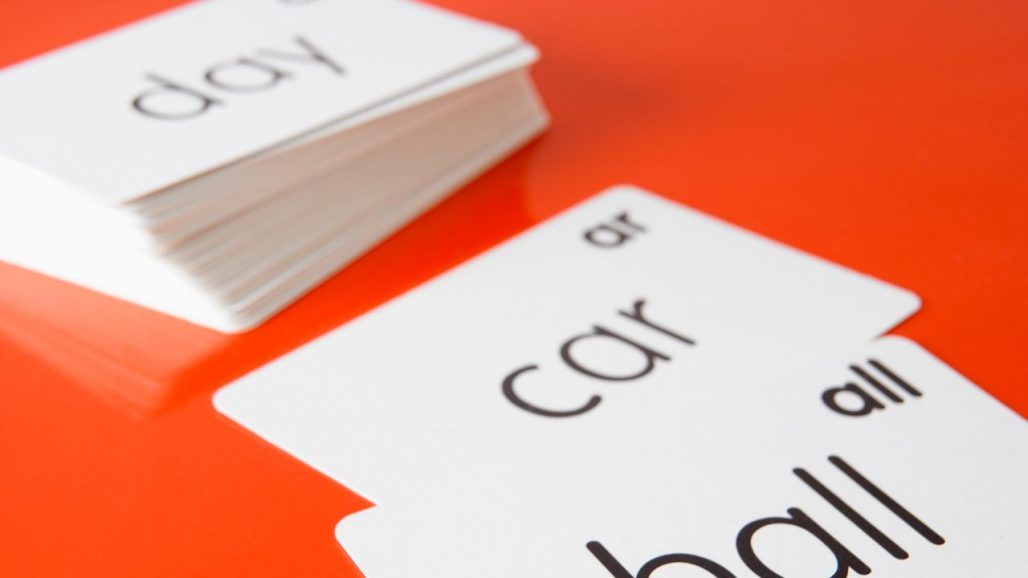
Using flashcards for studying is almost foolproof: they’re great for mastering large amounts of material, learning foreign language vocabulary, and ensuring long-term knowledge retention. This guide introduces you to the basic principles of this learning method, recommends the best apps, offers thirteen tips, and outlines all the advantages and disadvantages!
What Can and Can’t You Learn with Flashcards?
Whether you’re studying psychology, computer science, or communication studies – if you’re writing exams in your course, flashcards are an effective study method. They are commonly used for learning English or French vocabulary during school years. However, flashcards can be used for much more than just vocabulary! Here’s a brief overview:
- Definitions
- Formulas
- Dates
- Outlines
- Vocabulary
- Factual knowledge
- Simple question-and-answer sentences
- Multiple-choice format
Many law students use flashcards to learn definitions, as precise reproduction of terms is crucial. However, case solutions cannot be learned with flashcards. The same applies to formulas. While focused knowledge can be effectively tested, practical application requires other learning methods.
As you can see, not all study material is suitable for flashcard learning. Particularly complex topics are not well-suited. The more abstract the information, the less suitable it is for learning with flashcards. Internalizing complex relationships is almost impossible with this method.

How It Works: The Flashcard Box
Flashcards ranging in size from DIN A8 to DIN A6 are most suitable, depending on your handwriting size. Using too large cards risks writing too much on one, thereby losing the systematic learning effect. Write the keyword or question on the front of the flashcard, and the answer on the back. Keep it concise. A good rule of thumb is to use no more than ten words per side and avoid filler words.
After creating your flashcards, place them in your flashcard box. A typical flashcard box has five compartments of ascending size. Initially, all flashcards start in the first compartment. If you answer a card correctly, it moves to the next compartment. Continue this process during each learning session. If you answer a question incorrectly, the card goes back to the first compartment. Ensure there are sufficient intervals between your learning sessions. Recommended intervals for flashcard learning are:
- First compartment: Daily
- Second compartment: Every second or third day
- Third compartment: Weekly
- Fourth compartment: Monthly or less frequently
If you need to learn quickly for an exam, you can shorten these intervals. However, maintain a minimum interval of eight hours. For intensive study phases, you can also use just three compartments. Ensure that flashcard learning fits into your study plan!
Through repeated learning, information gradually moves into long-term memory. Systematic repetition counters forgetting. Ebbinghaus’s experiments on the forgetting curve show that repetition is essential for retaining information. Hence, you benefit most from this method if you start using it for foundational knowledge in your studies. The systematic flashcard learning method was invented by German journalist Sebastian Leitner, which is why this method is often called the Leitner System.

13 Tips to Get More Out of Flashcard Learning
- Categorize your flashcards by topic, event, or date. Use abbreviations like: “VL Nr. 1 Macro”.
- Use different flashcard boxes for different topics to avoid confusion. Alternatively, use colored flashcards for differentiation.
- Draw on your flashcards! Appealing visual representations aid in memorization.
- Don’t forget to note the source and page number when learning from a book on your flashcard.
- Stick your flashcards with removable washi tape in the book as a bookmark. It’s an excellent way to connect knowledge!
- Use flashcards for continuous review, especially during long study breaks.
- Group flashcards into sets of 10-20 cards for a focused and concentrated learning experience.
- Create flashcards immediately after learning the material. This reinforces the learning process.
- Start with simple flashcards and gradually increase the difficulty.
- Don’t limit yourself to text; use diagrams, sketches, and tables!
- Consistently shuffle your flashcard sets to avoid learning a fixed sequence.
- After mastering a flashcard set, mix it with other sets to maintain variety.
- Periodically review all your flashcards to prevent forgetting.
Advantages and Disadvantages of Flashcard Learning
Advantages:
- Flexible, mobile learning
- Suitable for all kinds of subjects
- Simple and effective
Disadvantages:
- Not suitable for complex topics
- Requires self-discipline and regular learning
Conclusion
Flashcards are an excellent method for learning simple, concise information, especially vocabulary. However, they are less suited for complex topics. Regular, disciplined learning is crucial for this method to be effective. Whether you prefer digital or analog, a systematic approach is key to success. Happy learning!
Looking for a reliable printing company?
Get an instant quote